
Ethiopian Greetings
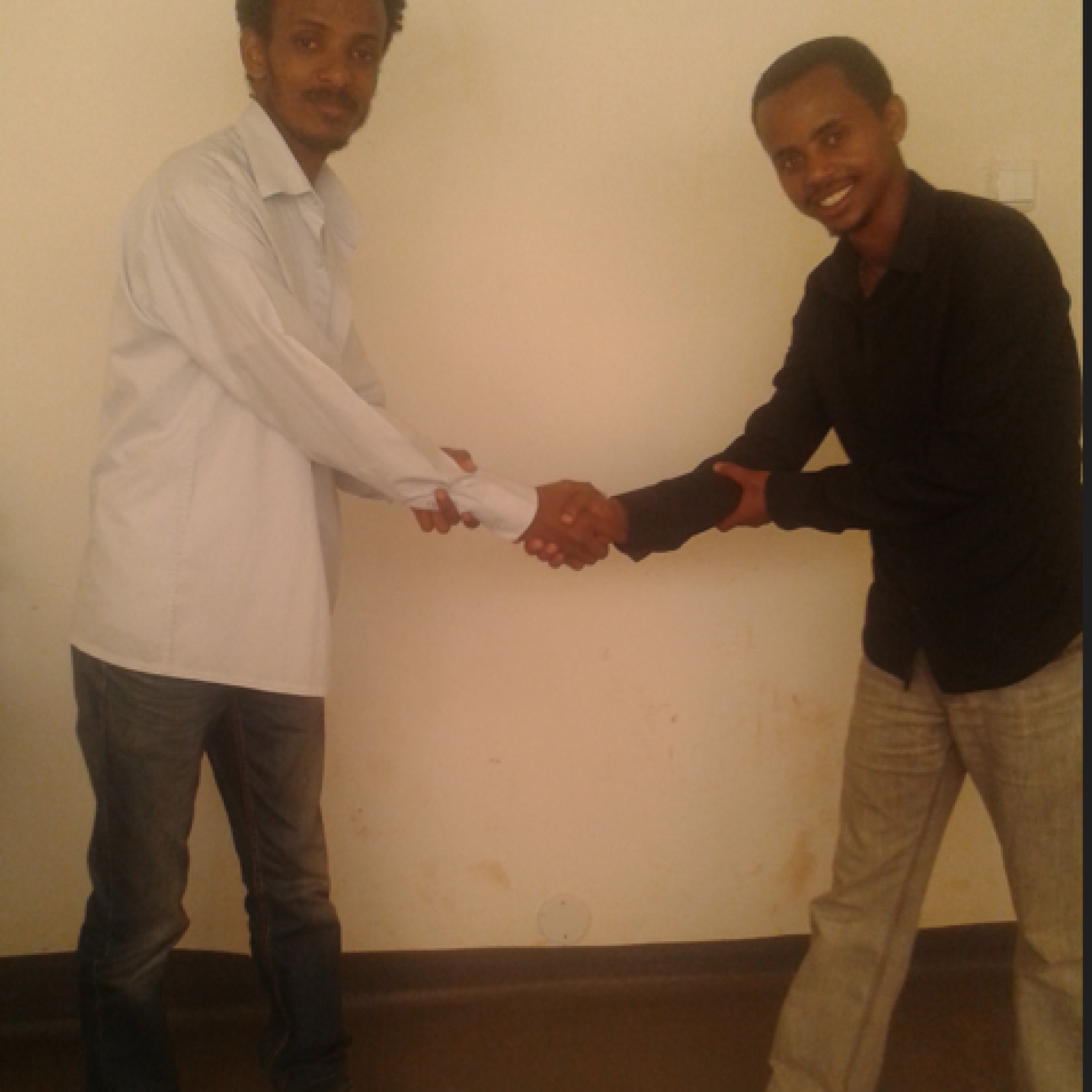
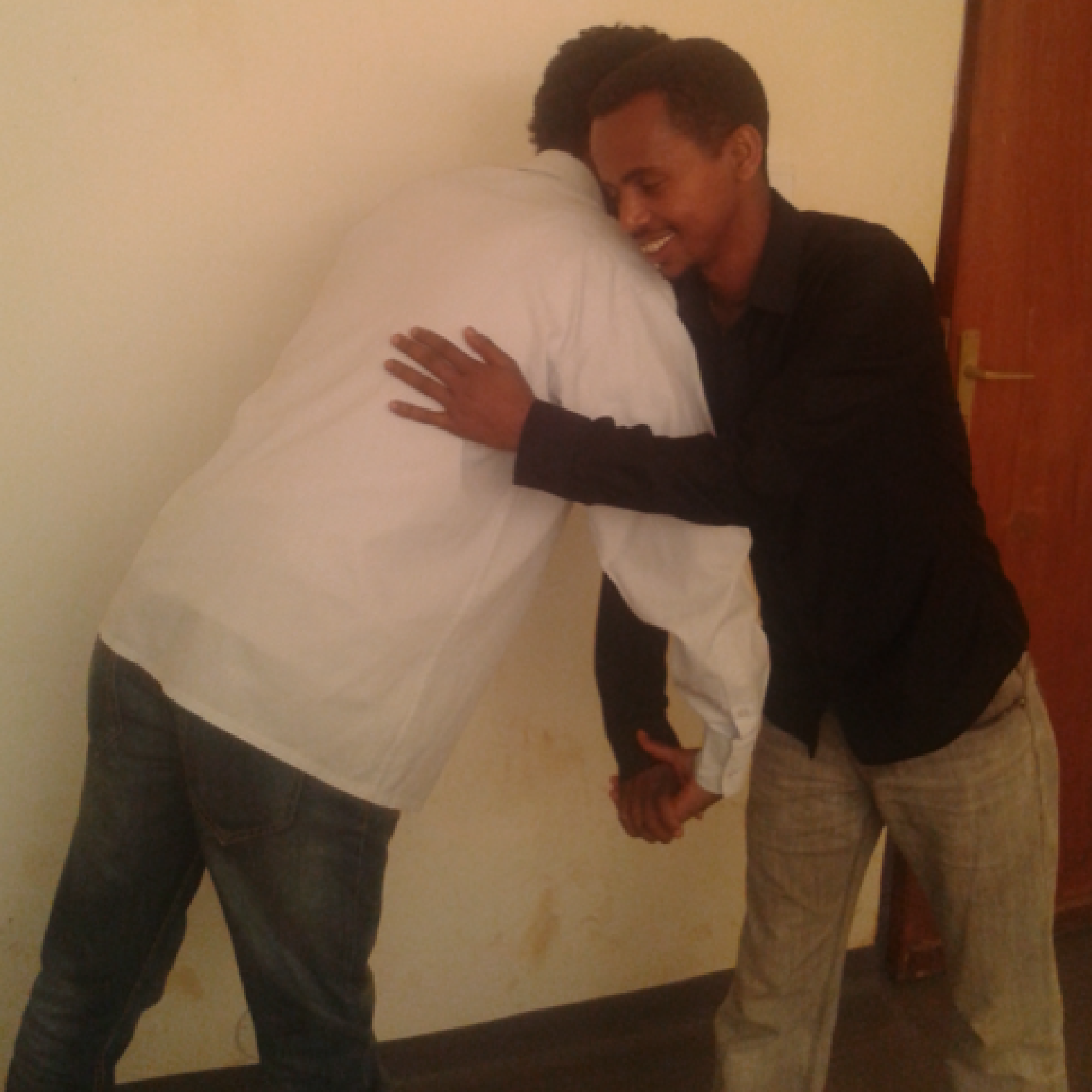
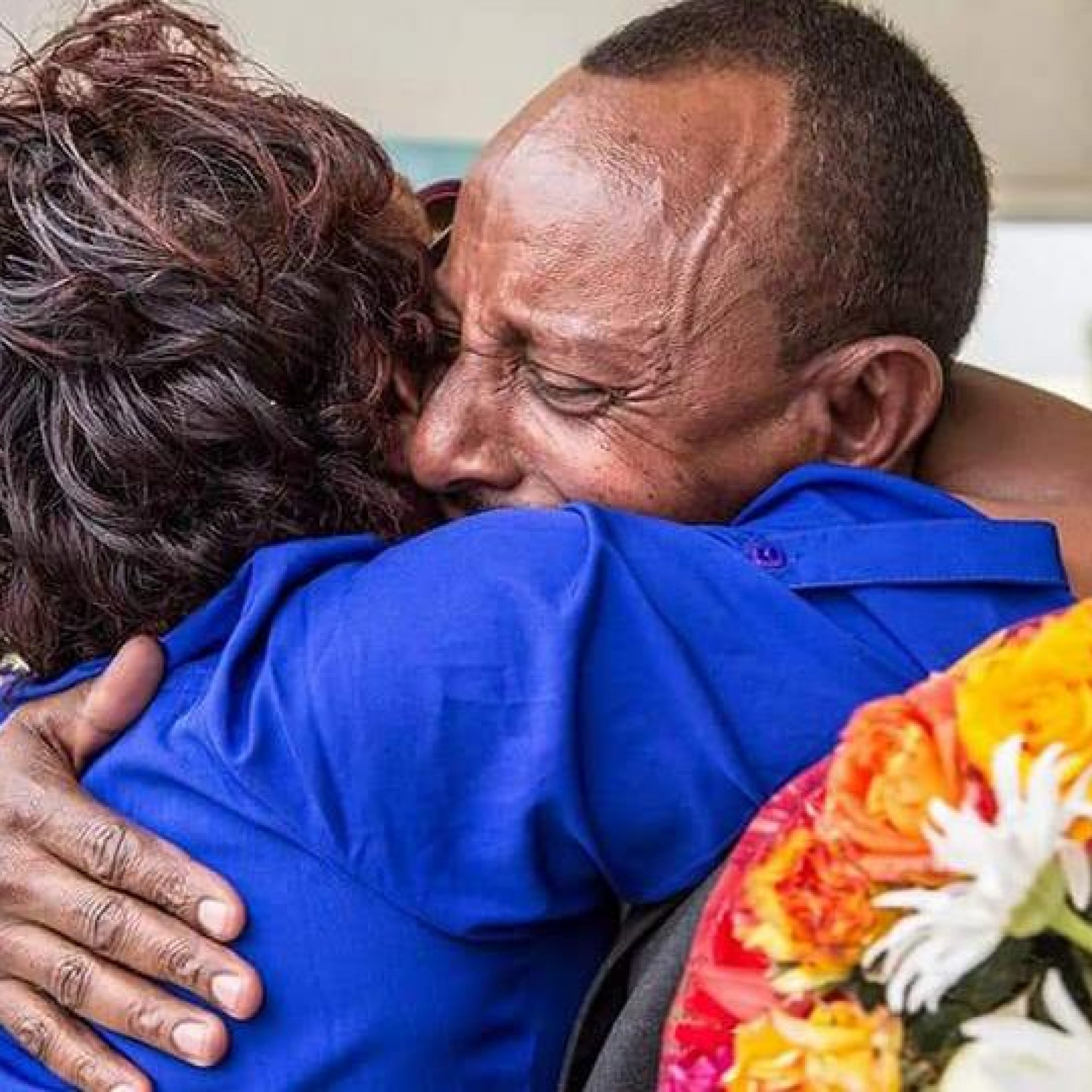
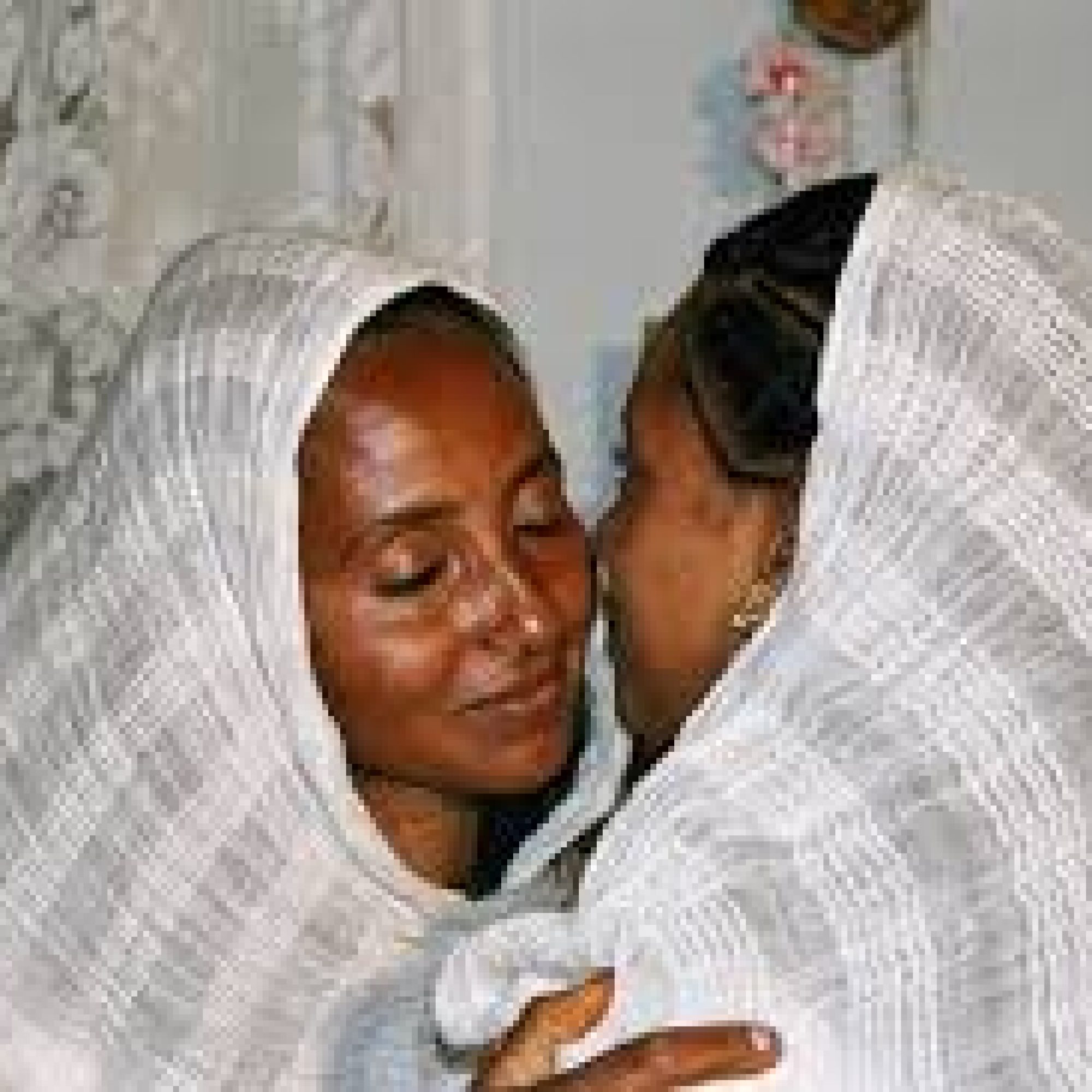
In the Ethiopian Culture, greetings are very important, unique, somewhat lengthy ritual, expressed with body language (smile or showing a sign of happiness), show respect and touch the hearts of people. Ethiopians greet by shaking hand, hitting shoulder, hugging, kissing. The kind of greeting indicates their intimacy, degree of affection and attachment with each other.
ˈTena yɪsˈtɪlɪgn/ጤና ይስጥልኝ: The first & foremost and universal aspect of the Ethiopian greeting is (ˈtena yɪsˈtɪlɪgn/ጤና ይስጥልኝ) an initial inquiry of the health of one’s counterpart” whether the person is family, friend, or stranger, and is not dependent on relative social status. ˈTena/ጤና = Health. yɪsˈtɪlɪgn/ጤና ይስጥልኝ = Let him give for me.
Not only they inquiry of the health of each other, but also after their family members, animals, harvest, business, and any elements of each other’s personal life with which they might be familiar.
ደህና፣ እግዚአብሔር ይመስገን/Dehna, igizɪābiḥēr yimesɪgen = Fine. Thanks to God : All answers are always prefaced with “thanks to God,” and they are always positive; any bad news must be saved for later in the conversation. Not to greet people and not to respond to greetings is impolite.
Kissing : It is common to see women kissing women, women kissing men, and men kissing men on the check in public including in the office. After a close personal relationship has been established, kissing 3 times on the cheeks is common. As well, If people meet each other after a long period of time, they greet each other by hugging and kissing repeatedly till they both get contained.
While greeting, Ethiopians
- Bow head, and raise one’s hat.
- Address with the title like Ato for man, Weziro for married woman, or Woizrit for an unmarried woman. For instance, Woizero (Mrs.) Senedu; Ato (Mr.) Eyasu; Doctor Tsedeke; Engineer Dagela, etc.
- Address the too elderly person with “Gash”. For instance,Gash. Tesfaye W/Meskel.
- Follow the hierarchy with respect age, wealth, education and social contribution.
Ethiopian Injera
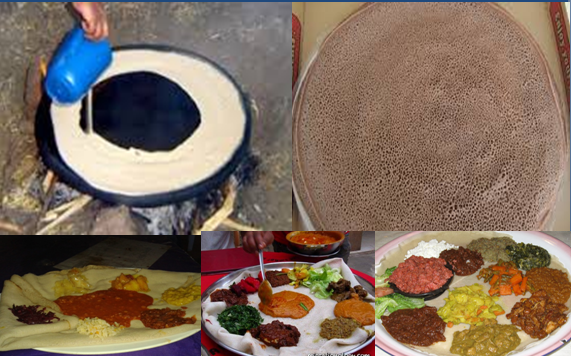
The staple food of the Ethiopian home is injera, a pancake usually made from a locally grown cereal called teff which is found only in Ethiopia. The teff batter is fermented for three days before being cooked over a large open wood fire. A typical meal will consist of a large injera, the size of a round coffee table, on which other dishes are placed such as boiled vegetables, spicy sauces, milk curds and on special days, chicken, beef, lamb or fish.
Feeding somebody else with hand is common in the Ethiopia. It is sign of love and respect , hence you have to take care not to refuse when it is offered.
Ethiopian Coffee Ceremony
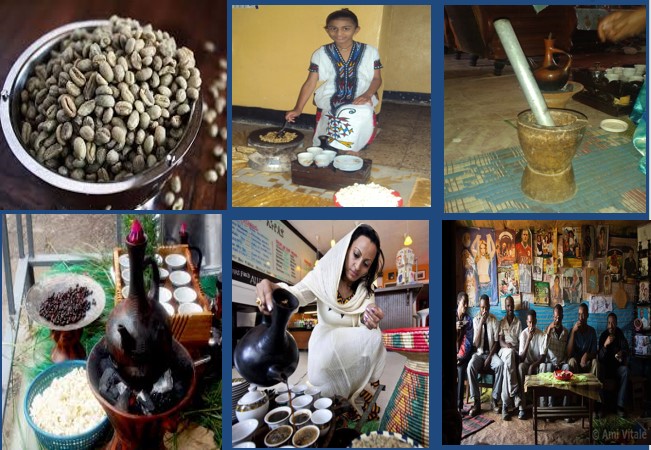
The ceremony follows a ritualized process, starting from the washing and roasting of green coffee beans to brewing the coffee in a special pot called a jebena. The aroma of freshly roasted beans is an essential part of the experience, inviting participants to inhale and appreciate the fragrance, which symbolizes the warmth of community.
The coffee is served in three distinct rounds: the first, called Awol, represents the strongest brew and is believed to carry the greatest significance in terms of flavor and importance. The second round, Tona, is a slightly weaker brew, and the third, Baraka, is the lightest, symbolizing blessings. Each round represents a step towards building deeper social connections and reflects Ethiopia’s communal values of sharing, respect, and hospitality.
The Anywaa and their Language
The Anywaa are Luo Nilotic people who mostly live in Gambella, south-western Ethiopia. The tribal name Anywaa (pl. Anywaae) is derived from the root ‘’nywaak’’ which means doing together/sharing. Thus, briefly, the tribal name Anywaa means a sharing tribe. This is because in their real life, the Anywaa share food, clothing, shelter, work and fighting against an enemy. Geographically, the Anywaa mostly settle along their rivers Openo, Akobo, Alworo, Gilo and Oboth. Thus, they are riverine people. Economically, the Anywaa usually use agriculture to lead their lives by mostly cultivating maize and sorghum. Furthermore, the Anywaa use fishing, hunting, cattle rearing, and small business activities as their economic activities.
The Anywaa language genetically belongs to Western Nilotic language, which is under the Nilo-Saharan language Phylum. The Anywaa call their language dha Anywaa, which literally means mouth of Anywaa. This language has more than 100, 000 speakers. Based on the 1994/1995 policy of FDRE, the Anywaa alphabet was devised by the Gambella Regional Educational bureau by using Latin-based script. From 1995-2019, Anywaa was used as a medium of instruction from grades 1-4 and as subject from grades 5-12. Currently, the language is used as a medium of instruction from grades 1-6 and as a subject from grades 7-10. Furthermore, there is Anywaa language department in Gambella Teachers Education and Health Science College (GTEHSC).
Phonemes and Graphemes
The Anywaa alphabet has 29 letters, which correspond to its 29 phonemes. The language has 19 consonants and 10 vowels, which are further divided into 5 plain and 5 breathy vowels. A diacritic above a vowel indicates that the vowel has a breathy voice quality. Although <u> has no two dots above it, this letter is a breathy vowel as its voice indicates. The correspondence between graphemes and phonemes implies that Anywaa uses phonemic orthography and alphabetic writing.
Vowel Graphemes and Phonemes.
Anywaa Vowel Grapheme | IPA Phoneme Equivalent | Example word | Gloss |
A | a | acuula | island |
Ä | ʌ̤ | bäc | wrap |
E | ɛ | ceer | stars |
Ë | e̤ | bëëyö | mosquito |
I | ɪ | liec | elephant |
Ï | i̤ | dïër | middle |
O | ʊ | boor | abscess |
Ö | o̤ | cöör | hat |
Ø | ɔ | tøng | spear |
U | ṳ | bur | ash |
Consonant Graphemes and Phonemes
Anywaa Grapheme | IPA | Example word for occurrence | Gloss |
b | b | abïla | hut |
c | tʃ | caala | hoe |
d | d | daak | remove |
dh | d̪ (ð) | dhaagø | female |
g | ɡ | gut | touch |
j | dʒ | jöö | road |
k | k | kuura | ball |
l | l | käc | hunger |
m | m | met | tasty |
n | n | nøk | few |
ng | ŋ | ngaam | empty |
nh | n̪ | nhøth | suck |
ny | ɲ | nyooth | indicate |
p | p | pöölö | cloud |
r | r | rang | watch |
t | t | tïïc | work |
th | t̪ | thaw | buttock |
w | w | wïc | head |
y | j | jääy | canoe |
Alphabetical Order
Like English, the Anywaa alphabet consists of capital and small letters. This alphabet is learned by starting from simple to complex letters. This is because plain vowels are learned before their breathy counterparts and digraphs and leaned before their non-digraph counterparts. Below is the alphabetical order of Capital and small letters of Anywaa language.
Capital Letters
A Ä B C D DH E Ë G I Ï J K L M N NG NH NY O Ö Ø P R T TH U W Y
Small Letters
a ӓ b c d dh e ë g i ï j k l m n
ng nh ny o ö Ø p r t th u w y